September 26, 1960: Speech to the United Nations General Assembly
Castro declares that “next year our people propose to launch an all-out offensive against illiteracy… Cuba will be the first country in America to be able to claim that it has not a single illiterate inhabitant.”
Early October 1960: First Congress of the Municipal Councils of Education
Local level and Ministry of Education officials convene and start to strategize. This first conference shows that Castro did arrange for some planning in the campaign.
Late October 1960: Creation of Comision Nacional de Alfabetizacion
The Comision Alfabetizacion (Literacy Commission), which was created after the rebels came to power, was replaced by new Comision Nacional de Alfabetizacion (National Commission), which was structurally different. It tied the local councils of education to national key members of government. It became vast machine for financial, propaganda and mobilization means.
November 1960: Special Census to Locate Illiterates Begins
The government sends out students, teachers, and voluntary census takers to the country side with a single page questionnaire to comb the villages for illiterates. It ended in August 1961, having found that roughly 1 million people in Cuba cannot read.
December 1960 – January 1961: Recruitment Efforts Start Full Force
Before this point, there were students and teachers in training, in the mountains. Parts of Red Army and IRNA and people in the cities became volunteer teachers for the Ministry of Education. Castro starts making more speeches, getting the word out (New Years Eve speech, etc.). There was no formal plan yet, but the propaganda machine was in place.
January 23, 1961: Death of Conrado Benitez Announced
Benitez was a young volunteer in Las Villas. “He was poor, he was a Negro, and he was a teacher,” and according to Castro, he was assassinated by counterrevolutionaries. Castro used the opportunity to further advertise the campaign. He turned the literacy project into issue of great national importance, and the young man into a Saint of the revolution.
January 28, 1961: Early Closing of Schools and Formation of “Conrado Benitez Brigadistas”
Castro announced that all secondary and pre-university schools will close on April 15, so that an army of literacy workers can be created. All children over the age of thirteen, will be given the “honor and privilege” of serving. Castro named the forces of students and young people “Benitez Brigadistas.”
Mid March 1961: Castro Takes Over Ministry of Education
The Minister of Education, Armando Hart, left for a tour of Eastern Europe. Castro considered this project so important, that he personally stepped in.
May 1, 1961: Post Bay of Pigs Speech—Castro Announces Nationalization of All Schools
Castro reaffirmed the socialist, radical, nature of the revolution, and gloated in the victory against the Yankees at the Bay of Pigs. He announces an end to the pre-revolutionary system of education.
Late May 1961: Varedero Beach Resort Training Center Expanded
Students and youth lived in hotels, clubs, former luxury resorts, taking special classes on revolutionary politics and rural life, participating in various recreational activities. By the end of August 1961, 105,700 students had been through the facilities. It is not the physical location or the programming that made the experience; it was the spirit, the fulfillment of revolutionary obligations, in the air.
May-June 1961: Teachers Join Campaign as Alfabetizadores Populares
After primary schools closed for the year, teachers joined, mostly as overseers on municipal levels, supervising students. They received a salary for this work.
Early August 1961: Confederation of Cuban Workers mobilizes 30,000 Brigadistas Obreros
Workers were called away from factories and shops to go teach. They received stipends and a salary while they traveled. The workers remaining in factories had to make up the work through over time and voluntary work. Teachers and workers served mostly as a back-up force to the Benitez brigades.
Early September 1961: National Literacy Congress
A Convention takes place at the ex-Havana Hilton Hotel, now called Havana Libre, for 4 days with 800 members, of national, provincial, municipal council, present. They came together to celebrate, to criticize and to improve the campaign. They stressed that there were only three months left to carry out the plan. They had the man power and apparatus in place—now the teaching had to start.
Mid September 1961: Beginning of School Year Delayed from September to January 1962
Most of the Ministry of Education personnel were working on the campaign, teachers were still in the field, and thus school could not start. This means students in Cuba were out of schools for eight months in 1961. At the same time, a “Plan of attendance” was established. Volunteers and parents set up alternative activities for children.
November 1961: Mass Celebrations and Final Push Start
Communities wrapped up their literacy programs and celebrated their achievements. Mass “graduation” ceremonies were arranged, awards, certificates, flags were handed out, and whole areas were declared free of illiteracy. “Acceleration camps” were set up to help those who had fallen behind and scholarships were promised to brigadistas who completed the program successfully.
Late November 1961: Death of Brigadista Manuel Ascunce Announced
A Brigadista and the father of the family with which the student was living, were hanged outside of the family home. Castro claimed it was done by counterrevolutionaries. This event gave the final weeks an incredible sense of urgency.
December 15, 1961: The Brigadistas Return Home
Trains from the provinces carried brigadistas home to Havana. A whole army of youth gathered to share their experiences. They were still wearing their uniforms and peasant’s hats upon arrival.
December 22, 1961: The Grand Finale
Hundreds of thousands met at Plaza to celebrate the campaign’s victory. “First came a gigantic Cuban flag, escorted by motorcycle police, then the flags of Socialist and Latin American countries….dignitaries and officials of the camping came next, then five hundred literacy workers with lanterns …five thousand soldiers of the literacy campaign bearing giant pencils…then came the brigadistas” (Fagan 53).
Pre Literacy Campaign: Purposes
Already in 1953, during his trial for the attack on the Moncada Army barrack, Castro proclaimed that it is unacceptable that 99% of peasants cannot spell their name and know nothing of history. By 1957, he included his passion for education in the Manifesto of Sierra Maestra. The campaign against illiteracy became part of ten point revolutionary program. Data from the 1950’s confirms that the Cuban education system greatly disadvantaged the lower classes, and that there was a decline in literacy. This partially explains the broad support the campaign received.
Post Literacy Campaign: Results
Critics point to the fact that only a first grade level of reading skills was achieved during the campaign, much too low to have real and immediate effects. The knowledge that had been gained would quickly slip away. Most importantly, 28% of those illiterates located in the census, would not or could not be taught. According to this evaluation, the campaign was a definite failure. Supporters point to the amazing scope and reach of the effort. Over one sixth of the country was mobilized. The everyday life of most Cubans was directly touched and affected by the campaign. Being able to finally spell their names, meant very much to the illiterates helped by the project. Reviews are mixed at best.
Comment:
The Cuban Literacy Campaign of 1961 was one of the most fantastic and dreamlike, almost whimsical, events of the early revolutionary period. A whole country was mobilized within months—children, teenagers, were driven into the countryside and mountains—peasants opened their homes to those children and for the most part, willingly received their instruction—teachers, government officials, and Fidel Castro himself, dropped what they were working on to momentarily dedicate themselves to the cause. An immense effort was poured into training teachers, printing materials, keeping labor running and younger children occupied, while the rest of the country had to function as well. The Cuban people threw themselves into a challenge which “was large enough to appear heroic without at the same time appearing absolutely impossible” (Fagan 36).
The project was turned over to the people in true revolutionary style. “The planning and organizational work would come after, not before this commitment” (Fagan 65). Fidel and Cuba committed to the campaign before any strategy was developed. Chaos was the plan, especially during the last couple of months, which is all the brigadistas had left to actually teach the people. At various random moments of the campaign, Castro haphazardly called on this organization, and that organization, to provide this many thousands of teachers. Castro’s whim was the plan, especially during the months when he ran the Ministry of Education. But the hectic and haphazard pace is exactly what the revolutionary government wanted—this was after all a revolutionary campaign. Castor firmly believed that “the act of trying, the struggle itself, opens up possibilities that could not have been imagined before the battle” (Fagan 65). The literacy campaign was as astonishing, albeit imperfect, a feat, as the effort of a dozen men in the Sierra Mountains.
Friday, November 13, 2009

Voice of the Cuban Revolution: Carlos Franqui
In 2007, the Cuban-American Undergraduate Student Association (CAUSA...www.harvardcausa.org) was able to bring Carlos Franqui to campus to have a discussion on the Cuban Revolution with one of the few outside of Cuba who actually lived it and fought alongside Fidel Castro. We have read parts of the Diary of the Cuban Revolution in the course. He spoke to about 80 undergraduates and members of the community in the CGIS Belfer Case Study Room.

(Franqui pictured in CGIS, with former HS B-64 TF Alfie Ulloa)
This was the blurb that introduced him:
“Born on a sugar cane plantation, Carlos Franqui rose through the ranks of the Communist Party in the years before the Cuban Revolution. He fought alongside Fidel Castro in the Sierra Maestra as his chief journalist, writing for the newspaper Revolución and organizing Radio Rebelde. In 1968, disillusioned with Castro's regime, he defected to Italy. A prolific writer and advocate of free expression, he has published numerous books, including Diary of the Cuban Revolution, one of the most authoritative collections of documents from the Revolution. He currently lives in Puerto Rico where he founded Carta de Cuba which features works by independent journalists on the island. “
Franqui is now in his late 80’s, and he resides with his wife and children in Puerto Rico. His background as an active participant in the Revolution has meant that Miami’s exiles have never fully embraced him. However, his intellectual openness and demands for civil liberties made him fall out of favor with the Castro regime.
After he left Cuba, he was actually erased from many records of the revolution, most notably, from this picture where he appeared with Fidel. (click image to see the picture with Franqui in it)

In response to this editing, Franqui wrote a poem:
“Descubro mi muerte fotográfica.
Qué existo?
Estoy un poco de negro,
Estoy un poco de blanco,
Yo soy un poco de mierda,
El chaleco de Fidel.”
I discover my photographic death.
Do I exist?
I am a little black,
I am a little white,
I am a little shit,
On Fidel's vest.
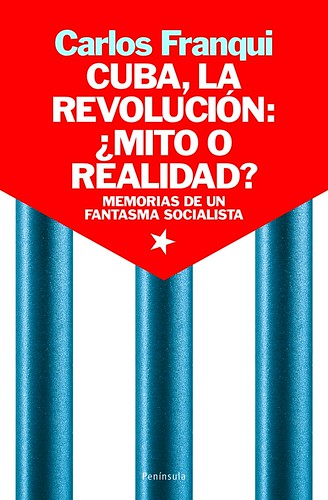
He recently wrote an interesting book entitled “Cuba, la revolucion, mito o realidad? Memorias de un fantasma socialista” (Cuba, the Revolution, Myth or Reality? Memories of a Socialist Ghost), which talks about some of the failed promises of the regime and prospects for improvment. He also founded Carta de Cuba (www.cartadecuba.org), a newsletter that publishes the writings of independent journalists and dissidents on the island.
Monday, November 2, 2009
Moral Incentives Polish Style
In the "Man of Marble," the best movie I've seen on Eastern European Communism, it's all about emulation.
This segment has the key three components: 1) incentivized by emulation and the logic of "voluntary" work, 2) a hard working young revolutionary, Mateusz Birkut, sets a productivity record, which in turn earns him 3) the full range of moral individual rewards: medal, flowers, handshakes with political authorities, invitation to festivities, admiration by women, emulation by (male) fellow workers, the marble statue (which gives the name to the movie, The Man of Marble) ... and a documentary about his life!
You can watch the rest (about 120 minutes) in YouTube. The above segment was part 3 of 17.
This segment has the key three components: 1) incentivized by emulation and the logic of "voluntary" work, 2) a hard working young revolutionary, Mateusz Birkut, sets a productivity record, which in turn earns him 3) the full range of moral individual rewards: medal, flowers, handshakes with political authorities, invitation to festivities, admiration by women, emulation by (male) fellow workers, the marble statue (which gives the name to the movie, The Man of Marble) ... and a documentary about his life!
You can watch the rest (about 120 minutes) in YouTube. The above segment was part 3 of 17.
Sunday, November 1, 2009


Wednesday, October 21, 2009
Cats and dogs and Cubans
.
US Pushed: stupid decisions that fueled the hate.
Quotes from the November 58 issue of Life Magazine:
"The liveliest charity ball of the New York season" was dedicated to the "Cuban Cause."
What is the "Cuban Cause"? To "send deserving young Cubans to design school."
"Waldorf Astoria decorated with Palm Trees"
"Jackie wore Givenchy."
Climax, from a guest: "Cats and dogs and Cubans are my charities this year."
Click on image to enlarge


US Pushed: stupid decisions that fueled the hate.
Quotes from the November 58 issue of Life Magazine:
"The liveliest charity ball of the New York season" was dedicated to the "Cuban Cause."
What is the "Cuban Cause"? To "send deserving young Cubans to design school."
"Waldorf Astoria decorated with Palm Trees"
"Jackie wore Givenchy."
Climax, from a guest: "Cats and dogs and Cubans are my charities this year."
Click on image to enlarge


Saturday, October 10, 2009
1959-61: Revolutionary take-off
1) Any chronology of the first three years of the Cuban revolution shows one clear overarching trend: RADICALIZATION.
Hence, big picture is massive radicalization in all political and social orders.
2) What are the causes of radicalization?
In adversarial/complementary pairs, explanations are:
3) Note: question of radicalization of revolution is obviously different from question of why rebels triumphed or why Batista fell. However, some causes of radicalization post January 1959 (economic structure a la O'Connor, or Ideology, or US diplomatic and IR errors) can also explain the events leading to the December 1958 revolutionary juncture.
- International relations: gradual but rapid adoption of a starkly adversarial stand against the US; Sovietization in particular. From timid "Andreev opening" in Oct 1959 to full blown geopolitical, commercial, and political alliance with the Kremlin by late 1961. For the US, from the cold but still non adversarial visit by Fidel to the East Coast to Bay of Bigs and Missile Crisis.
- Economic policy: increasing state control and socialization, from rent controls in April 1959 to massive expropriation of assets, rural or industrial, foreign or national.
- Politics: embrace of Communism. From Urrutia's government (first months of 1959) to the ORI, via alliance with, and subsequent control of, Communist Party.
Hence, big picture is massive radicalization in all political and social orders.
2) What are the causes of radicalization?
In adversarial/complementary pairs, explanations are:
- Ideological. Castro's ideology: ultra radical from the start (Lecture 08, Suchlicki) or increasingly radical over time.
- Pragmatic, non-ideological (my favorite). Initial measures hurt some allies (the moderates, the US), which require substitution (PSP, USSR); new allies demand more radical measures, which in turn fuels the selecion process in favor of increasingly radical allies (Welch). Protection of revolution = radicalization of revolution (why I like it? Because it is eminently political, and is a very general mechanism, from French Revolution to Independence Wars in Latin America in the early 19th century. The Cuban novelty is the absence of a Termidor).
- Learning (Dominguez, Perez, Castro himself, all with very different flavors): rebel leaders realize that moderation or gradual reform is not a feasible option. Any change = radical change. Underlying economic, structural conditions shape stark options: radical change or staus quo (O'Connor, Perez).
- Positive feedback loop between Castro and followers (Perez): Castro proposes a radical measure, followers increase their expectations for change, Castro proposes a more radical measure, which in turn raises again public expectations for change.
- US errors and incompetent policies: stupidity and carelessness push Castro and Cuba into Communism and USSR's hands (Lecture 11).
- International political structures: geopolitical competition between US and USSR dragged Cuba into a much larger world game (reinterpretation of Lecture 11 using Waltz's neo-realism in IR).
3) Note: question of radicalization of revolution is obviously different from question of why rebels triumphed or why Batista fell. However, some causes of radicalization post January 1959 (economic structure a la O'Connor, or Ideology, or US diplomatic and IR errors) can also explain the events leading to the December 1958 revolutionary juncture.
Sunday, October 4, 2009
Public Letter of Cuban Bishops to Castro
Carta abierta de los Obispos al Primer Ministro Dr. Fidel Castro
La Habana, 4 de Diciembre de 1960
- Dr. Fidel Castro Ruz
- Primer Ministro de la República
- Habana, Cuba.
Señor:
Graves sucesos ocurridos en los últimos tiempos nos han decido dirigimos colectivamente a Ud. para tratarle acerca de la situación de la Iglesia en nuestro país
No habíamos querido escribirle antes oficialmente sobre estos temas, porque la Iglesia, que es y se siente madre de todos los cubanos sea cual fuere su filiación política, no deseaba que ningún documento suyo pudiese ser interpretado como expresión de una actitud partidaria, que no cuadraría bien con su misión, esencialmente religiosa y sobrenatural; pero, dado el giro que van tomando las cosas en Cuba en relación con la Iglesia, nuestro deber de pastores nos obliga a exponer públicamente una serie de hechos que nos han producido un profundo pesar
Ya en el pasado año tuvo la Iglesia, en distintos momentos, ser motivos de preocupación, como cuando, a pesar de las reiteradas declaraciones de Ud. en que se sostenía el carácter no comunista del Gobierno, supimos que en los textos de adoctrinamiento revolucionario se enfocaban diversos problemas históricos y filosóficos con un criterio netamente marxista, y que numerosos profesores encargados de dicho adoctrinamiento aprovechaban sus conferencias para defender abierta las ideas comunistas y para denigrar las doctrinas y la obra de la Iglesia.
Estas preocupaciones vinieron a agravarse cuando publicamos el pasado mes de agosto una Circular Colectiva, en que se alababan medidas tomadas por el Gobierno Revolucionario en beneficio de humildes, pero se señalaba el peligro que representaba para nuestra patria el auge de la ideología comunista.
El mismo día que fue publicada, se detuvo a varios sacerdote por el delito de haberle dado lectura en las Iglesias, y se amenazó a otros con represalias populares si se atrevían a leerlas.
Si antes había habido más bien ataques aislados a los Obispos sacerdotes y organizaciones católicas, a partir de este momento puede decirse que comenzó una campaña anti religiosa de dimensiones nacionales que cada día se ha ido haciendo más virulenta.
Se han organizado mítines en muchos pueblos en que se ha insultado y vejado a los sacerdotes, a ciencia y paciencia de las autoridades locales.
Han sido clausuradas casi todas las horas católicas de radio y televisión.
Se ha injuriado y calumniado a los Obispos y a prestigiosas instituciones católicas por medio de los periódicos y las estaciones de radio hoy casi totalmente bajo el control del gobierno, y al mismo tiempo ha impedido la publicación o difusión de los documentos que en defensa de la Iglesia han suscrito las organizaciones seglares católicas, así como de las últimas pastorales del Sr. Arzobispo de Santiago de Cuba.
Se han formado, con la simpatía y el calor de las autoridades, asociaciones llamadas católicas, que parece que tienen como fin, no el propagar la doctrina de la Iglesia, sino el combatir a la Jerarquía.
Agentes provocadores han interrumpido en muchas ocasiones los actos religiosos en nuestros templos, sin que haya caído ninguna sanción sobre ellos.
Destacados voceros del Gobierno han declarado públicamente, distintos momentos, que ser contrario al comunismo equivale a ser contra revolucionario y no ha habido jamás una refutación oficial de esta tesis.
Todos estos hechos, y otros más que no enumeramos por no hacer demasiado largo este documento, podían acaso ser atribuidos, tratando de echar las cosas a buena parte, a criterios personales de ciertos funcionarios, o a consignas de ciertos grupos políticos, y no al gobierno mismo.
En días pasados fuimos dolorosamente sorprendidos por las palabras pronunciadas por Ud., en su condición de jefe de gobierno, desde la escalinata de la Universidad de la Habana.
Podemos, desde luego, suponer que las críticas que allí se hicieron contra los "colegios de los privilegiados", no se dirigían a las escuela católicas, ya que en ellas reciben educación y enseñanza miles y miles de niños y jóvenes de familias modestísimas, como lo prueba el hecho de ser muchas de ellas gratuitas o semigratuitas, y de existir e todas las demás un elevadísimo porcentaje de alumnos que disfrutan de becas totales o parciales, con más razón todavía tenemos que pensar que tampoco se atacó a nuestros colegios cuando se habló de "esos centros' en que se predica el odio contra la Patria y el odio contra el obrero y el campesino, porque nos costaría mucho trabajo creer, que ningún miembro de Gobierno sea capaz de lanzar gratuitamente una calumnia burda.
Pero no podemos pasar por alto las críticas que allí se dirigieron a nuestros heroicos curas de campo y a la Universidad de Villanueva..
Villanueva no es, como se ha afirmado el otro día, "una Universidad de Yanquilandia" sino una Universidad católica y cubana, una de la Iglesia cuyo profesorado está formado casi íntegramente por cubanos, y en que el aporte extranjero se halla representado por un grupo reducidísimo de padres agustinos, que no vinieron a este país para lucrar con su trabajo, sino servir a Cuba y a invertir en ella el dinero que les habían donado en otros países,
Más grave todavía para el prestigio de la Iglesia es que, con injustamente hiriente, se llame "botelleros" a abnegados sacerdotes que desempeñan una ejemplar labor espiritual y social en los ingenios, causa de las retribuciones que recibían de ciertas empresas, para su propio sostenimiento, para sus trabajos de apostolado y para sus obra de caridad, porque quien esto afirme está sosteniendo públicamente la inutilidad de la religión, al considerar las actividad de los sacerdotes equivalente a la de quienes inmoralmente recibían dinero sin trabajar. No conocemos, por otra parte, un solo caso de un capellán de un central que hubiera actuado como instrumento de explotación de los obreros, y sí de muchos casos en que los capellanes defendieron los derechos de los trabajadores, poniéndose inclusive al frente de ellos en momentos de huelga.
Cuando se nos atacó personalmente a nosotros pudimos callar porque, si como hombres teníamos el derecho a exigir una reparación, como obispos teníamos el deber de perdonar. Pero cuando se lastima e hiere a nuestros hijos espirituales, no actuaríamos como legítimos pastores de la grey que nos ha sido confiada, si no saliéramos en defensa de sus derechos y de su honra.
Queremos también insistir aquí en la grave injusticia con que, en varios momentos, se nos ha acusado públicamente de estar a la órdenes de fuerzas internacionales o potencias extranjeras, cuando es, por el contrario, bien sabido de todos que la Iglesia ha defendido siempre sin vacilaciones, en público y en privado, el derecho del pueblo de Cuba a su soberanía política y al pleno desenvolvimiento de sus capacidades económicas, y que el Episcopado no ha tenido jamás otra meta en sus actuaciones que al servicio de la Iglesia y de Cuba. Es innecesario recordarle, Sr. Primer Ministro, que la Iglesia ha enseñado siempre como norma fundamental de la conducta humana, la primacía de los valores del espíritu sobre todos los intereses de orden material, y por ello la Jerarquía Eclesiástica Cubana, siguiendo el ejemplo de los cristianos de todos los tiempos, está dispuesta a sacrificarse sin temor alguno y a perderlo todo antes que claudicar en sus principios.
Por lo demás, los Obispos de la Iglesia Católica tenemos por norma inquebrantable tratar siempre con el máximo respeto, y con cristiana caridad a todos, amigos o adversarios, y aun a nuestros gratuitos detractores, y cuando defendemos, aunque sea con la mayor energía nuestros principios, sabemos guardar la debida consideración a las personas que no piensen como nosotros.
Esperando, pues, que por parte del gobierno se tomen las medidas necesarias a fin de que cesen los repetidos ataques de que se está haciendo objeto a los católicos, queremos reiterarle, Sr. Primer Ministro, la seguridad de nuestras continuas oraciones para que el Señor le ilumine de modo que los pasos que dé el Gobierno que Ud. preside, vayan encaminados al bien de esta Patria cubana, a cuyo pleno engrandecimiento hemos consagrado todos nuestros esfuerzos, sacrificios, y desvelos.
Atentamente,
- Manuel, Cardenal Arteaga, Arzobispo de la Habana
- Enrique, Arzobispo de Santiago de Cuba
- Evelio, Arzobispo Coadjutor y Admor. Apostólico de la Habana
- Carlos, Obispo de Camagüey
- Manuel, Obispo de Pinar del Río
- Alfredo, Administrador apostólico de Cienfuegos
- José, Obispo Auxiliar de la Habana
- Eduardo, Obispo Auxiliar de la Habana
- Manuel, Vicario Capitular de la Diócesis de Matanzas
Subscribe to:
Posts (Atom)
